

At the three-day conference in Pretoria, the partners connected emerging technology with a shared ambition: helping young South Africans turn educational opportunity into practical skills and meaningful work.
A small drone followed its presenter, responded to hand gestures and brought the possibilities of robotics into the conference room. At Southern Sun Pretoria, where the conversation centred on student funding and financial management, the demonstration offered a glimpse of the working world young South Africans are preparing to enter.
For I-Innovate and DroneLabs, that connection was the reason for being there.
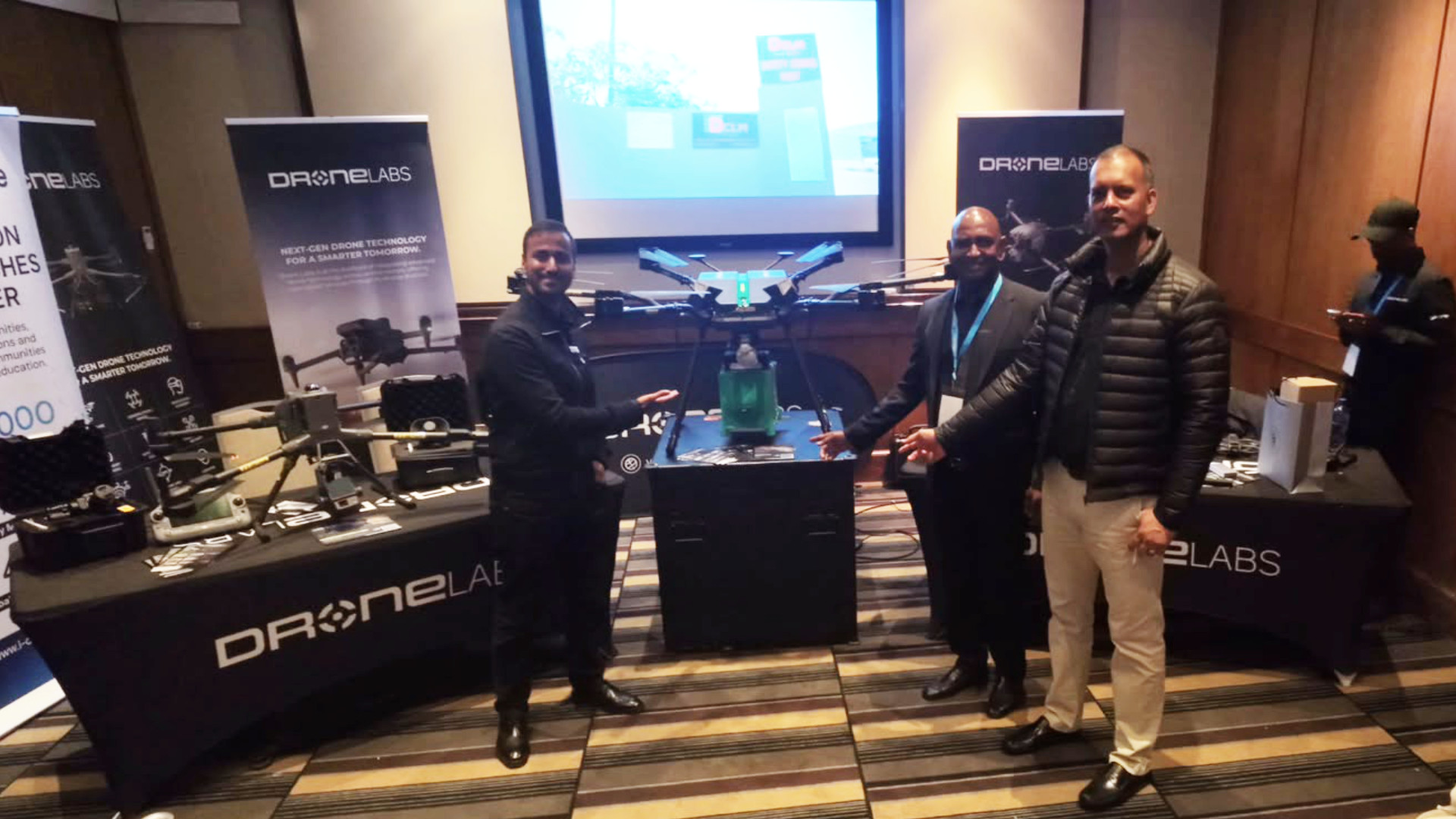
The partners participated in the three-day Financial Aid Practitioners of South Africa (FAPSA) 2026 conference, bringing together educational outreach, industry experience and state-of-the-art drone technology. Through their presentations and DroneLabs’ exhibition presence, they explored a question that connected directly with the work of the delegates: how can the opportunities made possible by student funding lead to skills, confidence and a place in the economy?
The person behind the funding
The conference’s theme, “Emerging Trends and Technologies in Financial Aid and Student Financial Management”, placed digital transformation, artificial intelligence and better student support systems at the centre of the agenda. For the financial aid practitioners, institutions and partners gathered in Pretoria, these developments carried consequences for the people relying on their services.
That human dimension ran through the recorded session. Contributions addressed student-centred support, historical debt, bursary administration and digital payment systems. A recurring concern was whether innovation would make students’ lives easier and help them progress.
I-Innovate and DroneLabs brought a complementary perspective to that discussion: the learning experiences and professional connections that can help students make use of the opportunities they receive.
Two journeys meeting around a shared prupose
DroneLabs founder Leonard Balakisten highlighted the growing urgency of disaster management, climate change and rapid response in a world facing increasingly complex environmental challenges. Drawing on The Climate Book, brought together by Greta Thunberg, he encouraged delegates to consider the threats to water, food security and clean air, and the responsibility to act. He connected these concerns with the potential of drone technology to strengthen preparedness, inform decisions and support faster responses. His message called for equipping future generations with the knowledge, skills and sense of responsibility to become guardians of the Earth.
Leonard connected that experience with the challenges facing future generations, including water, food security and environmental conditions. His message positioned drone technology within those realities: a means of investigating problems, building practical expertise and preparing students to contribute.
Representing I-Innovate, CEO Shivar Rajoo brought the organisation’s decade-long educational journey into the same conversation. He reflected on practical STEM programmes, educator support, astronaut engagements, experiments linked to the International Space Station, and initiatives introducing young people to AI and other emerging technologies.
Across those experiences, I-Innovate has worked to make unfamiliar possibilities accessible to learners. Exposure can introduce a career that a young person has never considered, or reveal an unexpected connection between a classroom subject and the place they call home.
The partnership brings these experiences together. I-Innovate connects education, communities and opportunities for discovery; DroneLabs contributes aerial technology, technical expertise and practical insight into industry. Their shared purpose is to help young people see where their abilities could take them, and understand the steps towards getting there.
Technology learners can see, question and use
DroneLabs’ showcase gave that ambition a physical presence at the conference. Alongside the drones on display, the team explained the professional work surrounding them: assessing risks, planning missions, operating safely, collecting information and turning it into something useful.
The DroneLabs team brought these ideas to life through drone showcases and flight demonstrations around the venue, giving delegates a practical view of the technology and the expertise behind it. Their skill in operating the equipment reinforced the importance of training: every controlled movement depends on preparation, sound judgement and an understanding of safe flight. Alongside I-Innovate’s emphasis on opening opportunities for young people, the demonstrations showed why access to technology must be supported by instruction, mentoring and practical experience, helping learners develop the competence and confidence to use it responsibly.
The discussion opened up a range of possible roles. Drone operations involve pilots, but also people who process imagery, develop software, build maps, maintain equipment and interpret environmental information. The team described taking students onto sites to encounter these tasks and understand what engineers and surveyors actually do.
Carl, DroneLabs’ educational technologist and Fourth Industrial Revolution specialist, made the learning potential tangible with his live demonstration. As the small drone followed him and responded to gestures, he described it as a flying robot, connecting the spectacle with robotics and programming.
He also presented a less visible but significant part of the learning approach: a compact Raspberry Pi computer hosting a learning management system. He explained how learners could connect using phones or tablets and access course activities without an internet connection. For institutions serving areas with limited connectivity, that design addresses a practical barrier to participation.
When a familiar problem reveals an unfamiliar career
Shivar brought the discussion back to a learner’s perspective through an imagined example: a young person who walks past a polluted river every day. During a drone demonstration, that learner discovers that the river can be mapped, its condition investigated and the information used to help protect the surrounding community.
“Suddenly science has a purpose,” he told delegates.
The example captured the connection between the partners’ work. I-Innovate’s focus on exposure and meaningful learning meets DroneLabs’ ability to demonstrate how technology is used in practice. A familiar local problem becomes an entry point into environmental analysis, mapping, engineering or data work.
Shivar also highlighted the contribution of the arts within STEAM: science, technology, engineering, arts and mathematics. Design and communication help learners turn information into findings that others can understand and act upon. There is room in that work for different strengths, including coding, visual communication and project coordination.
His contribution connected early exposure in secondary school with further study at a TVET college or university, practical training, work-integrated learning and progression towards employment or entrepreneurship. Mentoring, supervised projects and feedback can help learners build evidence of what they can do along that journey.
Giving the next step a practical shape
The presentations included an invitation to explore institutional pilots. Carl and Leonard proposed working with groups of students and partner institutions through a structured programme, beginning with foundational knowledge and progressing towards practical applications. Interested delegates were invited to register their interest for follow-up discussions.
For I-Innovate and DroneLabs, the conference created a setting in which education, industry and student support could be considered together. It brought the partnership’s work into a national conversation about what it takes for young people to enter education, succeed within it and move towards a livelihood.
The shared ambition gives the technology its significance. A drone demonstration can spark curiosity. Educational support can help a learner recognise a strength. Practical experience and professional guidance can then help that interest develop into a direction.
At FAPSA 2026, I-Innovate and DroneLabs connected those steps. The story they brought to Pretoria began with technology in the air and reached towards something much closer to home: young South Africans gaining the knowledge, confidence and opportunity to help solve the problems around them.
