
I-Innovate and DroneLabs Join Community and Conservation at Beachwood Mangroves (Durban, KZN) for a Coastal Clean-Up
More than 800 participants, including learners and educators from over 15 schools, came together in Durban for a coastal cleanup connecting environmental action, education and drone technology, as the global campaign marked 40 years of protecting beaches and waterways.
The storm could have kept people away.
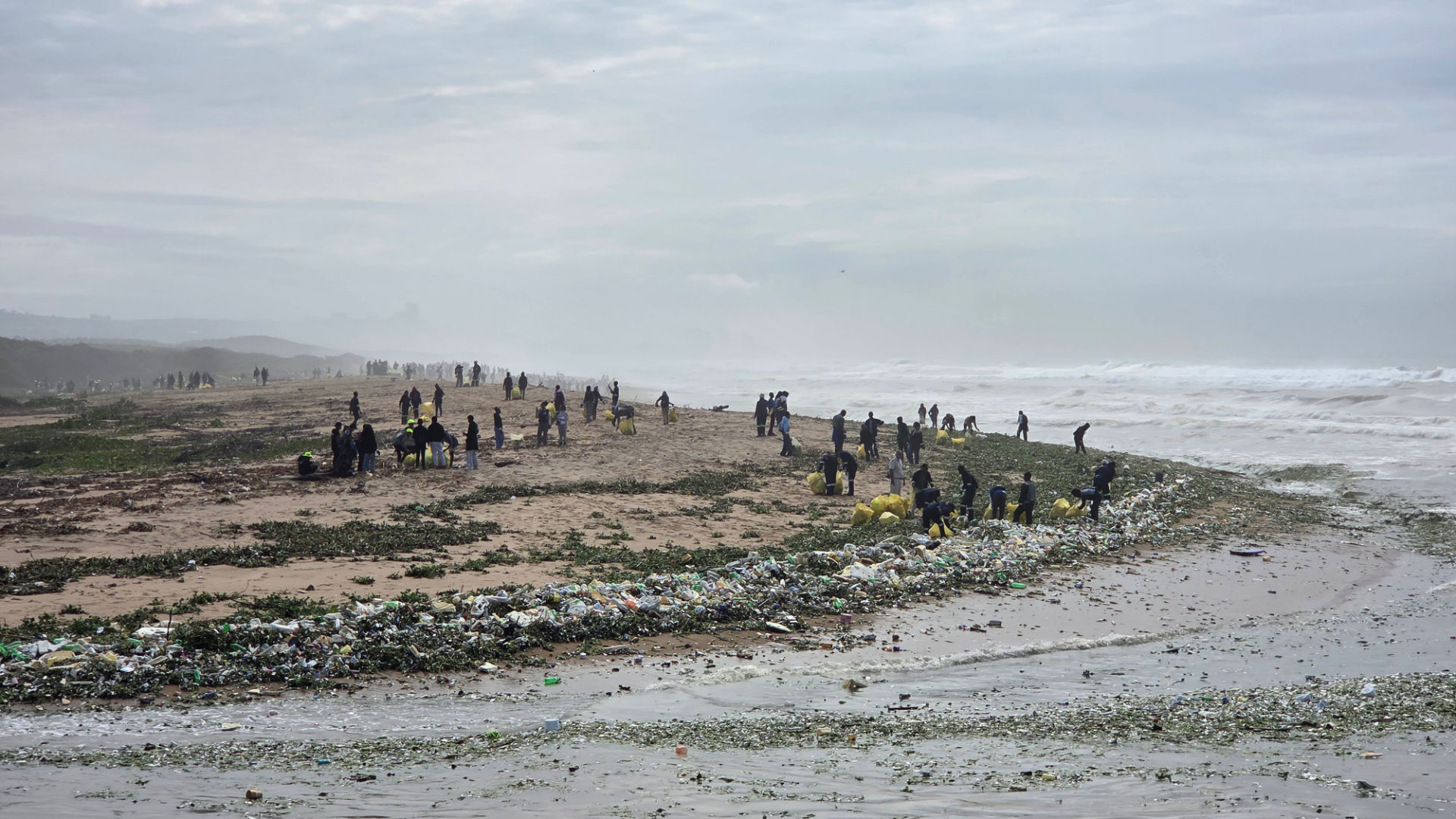
After heavy rain swept through Durban, more than 800 participants came together at Beachwood Mangroves Nature Reserve on Saturday, 19 September 2026, with a shared purpose: to help care for the coastline they call home.
Community members, NGOs, scientists, Scouts and industry partners joined learners and educators from more than 15 schools for International Coastal Cleanup Day. Among them, I-Innovate helped connect the environmental work happening on the ground with the learning opportunities unfolding around it.
There was waste to collect, knowledge to share and, above the coastline, technology at work.
Forty years of International Coastal Cleanup Day action
Spearheaded by the Department of Forestry, Fisheries and the Environment (DFFE), with Deputy Minister Narend Singh leading the occasion, the gathering brought national environmental priorities into a setting where people could take part directly. The Beachwood programme also brought together Ezemvelo KZN Wildlife, the North Durban Honorary Officers and Mangosuthu University of Technology under the theme “Sea the Change”.
That theme found practical expression in the people who arrived ready to contribute. Young people worked alongside adults, institutions shared their expertise, and organisations with different capabilities found common ground in protecting the same stretch of coast.
The occasion carried significance beyond Durban. The International Coastal Cleanup campaign marks 40 years of global action since its launch in 1986, bringing communities together to remove waste from beaches and waterways, protect marine life and educate the public about responsible waste management. From its beginnings in Texas, the initiative has grown into an international movement built on collective action and the recording of coastal litter.
At Beachwood, that global purpose became local and tangible. Every participant had an opportunity to contribute to a healthier coastline while learning why the work mattered.
Environmental learning across more than 15 schools at Beachwood Mangroves (Durban, KZN)
For I-Innovate, the involvement of more than 15 schools made the educational opportunity particularly meaningful.
A coastal cleanup offers an immediate way to make a difference. It also opens a conversation about how waste reaches the ocean, how ecosystems respond and how science can help communities understand what is happening around them. Those connections sit at the heart of I-Innovate’s approach to education: giving learners opportunities to encounter challenges firsthand and recognise their own ability to respond.
With so many schools represented, the experience also created opportunities for those lessons to travel further, into classrooms, homes and conversations among friends.
Throughout the event, I-Innovate engaged with community members, SCOUTS South Africa, representatives from the University of KwaZulu-Natal (UKZN) and Mangosuthu University of Technology (MUT), helping keep education and awareness part of the day’s wider purpose.
Contributions from Deputy Minister Singh and university academics drew attention to microplastics and nanoplastics, bringing the discussion beyond the litter participants could readily see. Their briefings explored the environmental concerns associated with these tiny particles and the importance of helping communities understand plastic pollution.
For the learners present, the setting gave those discussions an immediate relevance. The environment being discussed was right in front of them, and they were already participating in its care.
DroneLabs monitors the coastline from above for improved beach clean up
DroneLabs brought another perspective to that experience.
Founder Leonard Balakisten and CEO Jolene Balakisten joined the event with their team, deploying drones to observe the coastline, support the identification of areas needing attention and provide aerial information to the DFFE.
At the centre of these operations was the DroneLabs mobile command centre van.
The specialised vehicle served as a base for monitoring the coastline scanning and viewing information coming back from the aircraft. As volunteers worked below, the drones provided a broader perspective on the surrounding area, helping the team observe cleanup activity and pinpoint sections requiring attention.
That relationship between the view from the ground and the view from above gave the technology a clear purpose.
The event highlighted how aerial mapping could support the assessment of debris carried through waterways after heavy rainfall, help identify where resources are needed and enable comparisons of coastal conditions before and after storms. For a city familiar with severe weather, these applications connected closely with local experience.
The DroneLabs trainers and pilots deserve particular recognition for the expertise behind the demonstration. Their work made it possible for participants to see drone technology operating in a live conservation setting, with an immediate connection to the task around them.
Alongside DroneLabs, I-Innovate helped place that experience within a wider educational story.
Science, technology, engineering and mathematics came together in the aircraft, the mapping and the interpretation of information. Environmental conservation gave those disciplines a shared purpose. Learners could see how technical skills might one day help them investigate pollution, monitor coastlines or support the communities in which they grow up.
It reflected a philosophy shared by I-Innovate and DroneLabs: encouraging young people to become guardians of the Earth, equipped with both the concern and the knowledge to care for it.
Guy Caws and a lifetime of environmental education
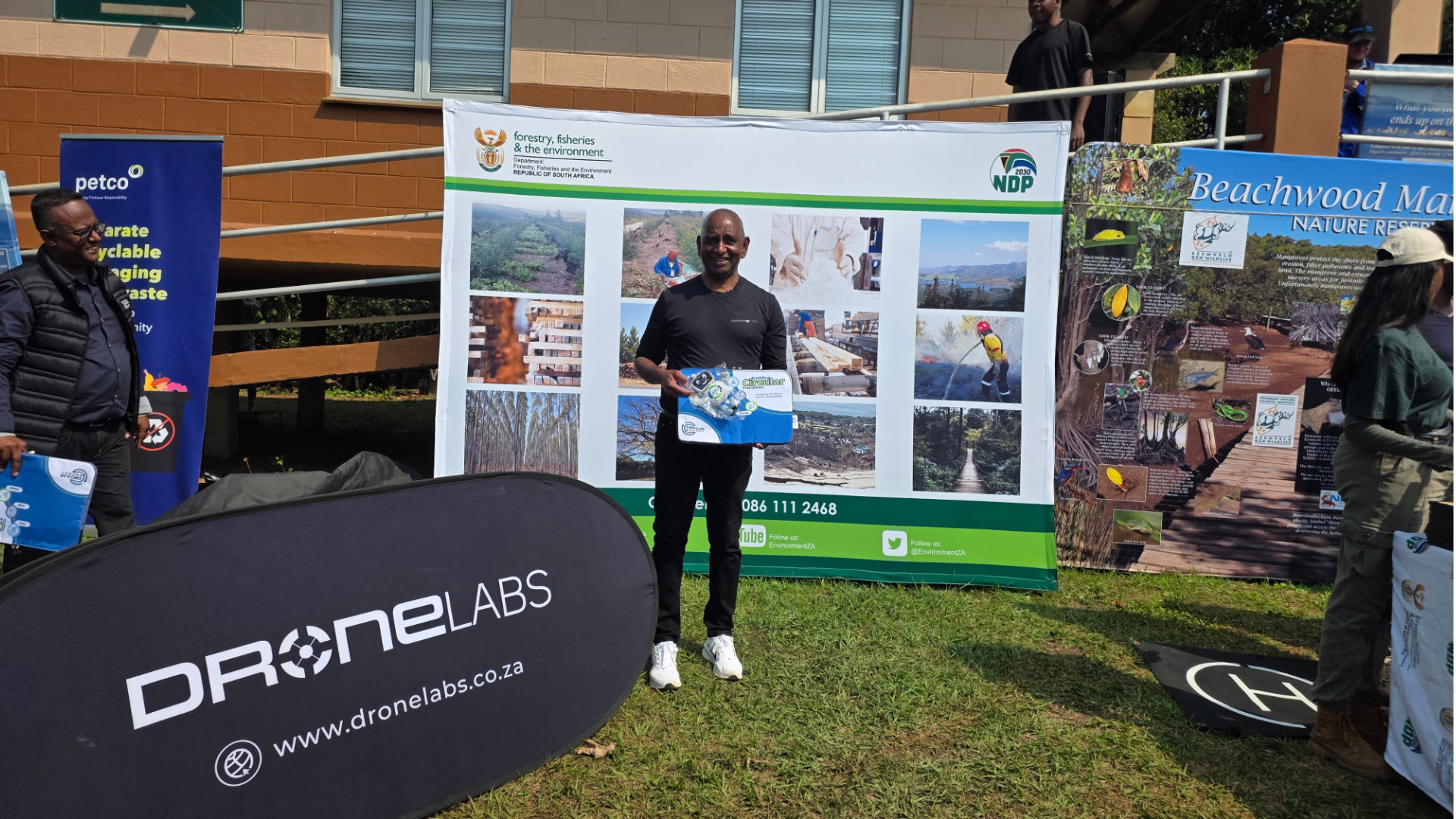
That commitment to learning across generations was also reflected in the presence of SCOUTS South Africa and environmental educator Guy Caws.
A former teacher and education officer with eThekwini Municipality’s Cleansing and Solid Waste Department, Caws brings decades of experience in environmental education and Scout leadership. Although retired, he remains actively involved in environmental activities.
His handbook draws on 40 years of experience to help Enviro-Club leaders plan meaningful meetings. Featuring activities tested by Enviro-Clubs and other youth groups, it provides practical guidance on preparation and resources. His work offers a way to carry the enthusiasm of events like this into regular activities that help young people develop a lasting relationship with the environment.
Responsible waste management beyond the cleanups
I-Innovate also engaged with Petco and Polyco, broadening the conversation to what happens to packaging after people have finished using it.
Petco supports the collection and recycling of packaging through its producer responsibility work, while Polyco invests in South Africa’s plastics collection and recycling sector. Their work highlights the systems, skills and public participation needed to keep useful materials in circulation and reduce waste in the environment.
These conversations reinforced an essential part of the campaign’s purpose: helping people understand responsible waste management and the everyday decisions that influence where waste ends up.
Across the reserve, each contribution formed part of a shared effort. Government brought leadership, universities brought knowledge, conservation partners brought local experience, and community members brought their time and energy. Schools and Scouts brought young people into the work. DroneLabs added technical capability, while I-Innovate helped connect that capability with curiosity, learning and possibility.
For I-Innovate, this is where education becomes especially powerful: when young people can take part, meet people applying their skills and begin to imagine how they might contribute themselves.
The rain had given Durban another reason to think about the relationship between its streets, rivers and sea. The people who gathered at Beachwood responded with action.
Forty years after the global campaign began, its purpose was being carried forward by another generation. Among the learners from more than 15 schools were young people who had come to help clean a coastline and encountered new ways to understand and protect it.
Some may go on to become scientists, educators, drone pilots or conservationists. All had already taken a step towards becoming guardians of the coast, through the work they chose to do that day.